Five real Mira lines, one request each, unedited.³ The board is drawn to show scale, not a live count.
Why Frequency
The problem
Most voice agents are built from six different vendors.
The phone line, noise removal, speech recognition, the language model and the voice each come from a different company. Every hand-off adds delay and cost.
The solution
We run every part of the call ourselves.
The phone line, speech recognition, language model and voice all run on our own GPUs in India, for one price a minute.
- The line. Theirs: Twilio / Plivo / Exotel, vendor edge, often outside India — network 1 · a separate telephony integration. Ours: Indian carrier trunks, our own interconnect, no CPaaS in between.
- Orchestration. Theirs: Pipecat Cloud / LiveKit / Vapi, US region — network 2 · a TLS handshake and a vendor queue. Ours: our worker, a LAN hop, one data centre.
- Noise. Theirs: Krisp, vendor cloud — network 3 · the audio leaves again. Ours: Fourier denoise, in process, no network at all.
- ASR. Theirs: Deepgram / AssemblyAI / Sarvam, US or Indian region, per vendor — network 4 · a separate speech recognition stream. Ours: Mira ASR, the same card as the model and the voice.
- LLM. Theirs: OpenAI / Anthropic / Gemini, US region — network 5 · another connection for every reply. Ours: open source LLM, the same card.
- TTS. Theirs: ElevenLabs / Cartesia, US region — network 6 · a separate speech synthesis stream. Ours: Fourier TTS, the same card, first audio back on the same LAN.
Response time
Stitched stackFrequency
- ASR + VAD + buffer900 ms590 ms
- LLM400 ms150 ms
- TTS300 ms110 ms
Now, let’s talk about the most important aspect: price.
India needs pricing made for India.
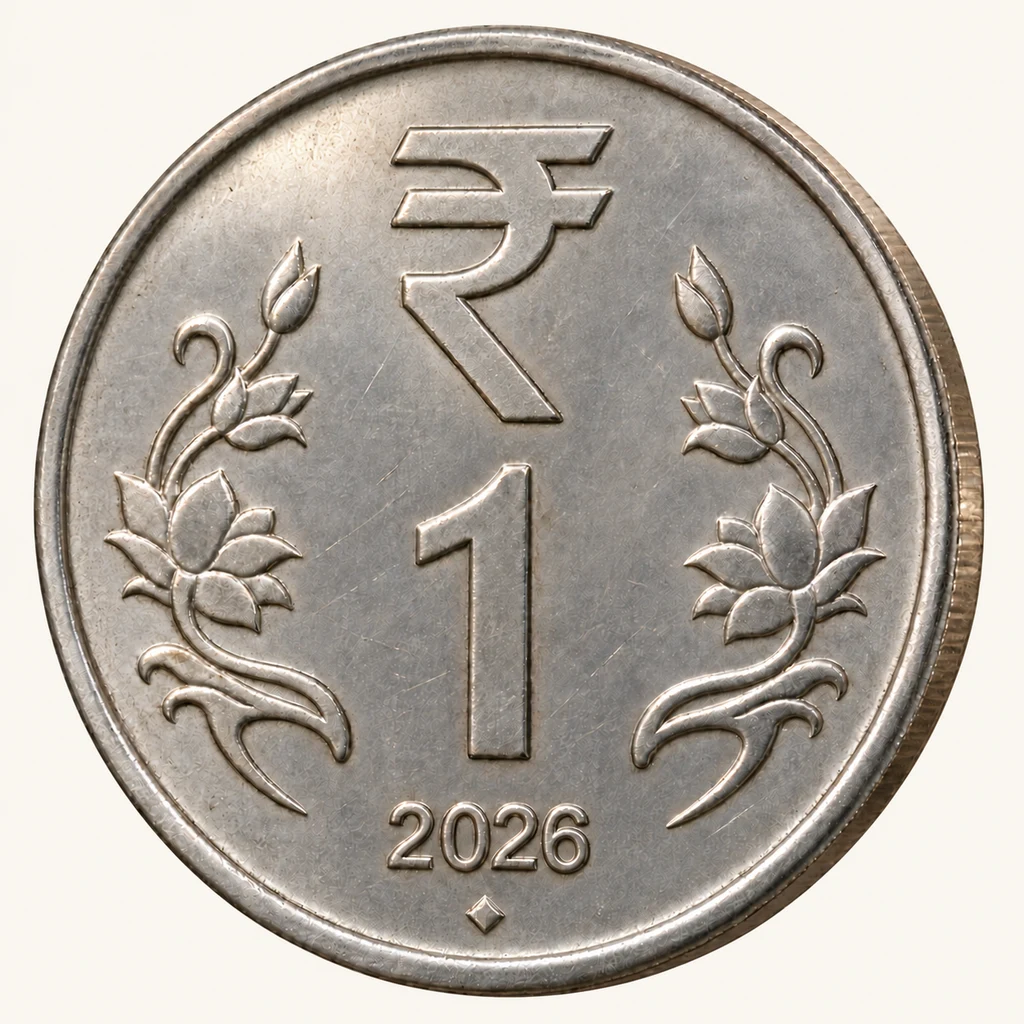
One rupee used to buy you
a call from an STD box.
₹1 a minute. A voice agent.Now the machine on the line talks back.
Stack
Five products to connect.
One conversation to get right.
Every layer. One Frequency Stack.
₹1* for voice AI / min
नमस्ते, मैं आशु बोल रहा हूं। आपकी EMI पांच तारीख को due है — क्या online pay करेंगे?
Rendered by Fourier TTS · 2026-09-03
Start on T5 at ₹5/min with no commitment. *T1: ₹1/min with a ₹1,00,000/month standard minimum. Optional Mirai telco +₹0.30/min; insights +₹0.20/min. No Mirai telco charge for BYO, WhatsApp or browser calls. All prices exclude GST.
Running in production
How we got Voice Infra into production.
Build the fleet
We started by renting GPU capacity and building our fleet in Indian data centres. Then we took charge of how that compute runs, scales and serves every call.
Rented compute. Operated by us.
Own the core
TTS is the most compute-intensive and expensive layer. We trained Fourier TTS from scratch and wrote its inference engine to deliver 3× the throughput of the industry standard.
24 streams per GPU, compared with the industry’s 8.
Prove it live
Before opening to the public, we spent three months running live with beta customers. Real calls, real feedback. Test, fix, test again.
Three months with beta customers before public access.
Stay bootstrapped
Bootstrapping gives us room to focus on the core: better models, faster inference and lower costs. We build for customers, on our own terms.
Customer revenue goes back into the core.

Built for builders
All this infrastructure. One API call.
The GPU fleet, the speech models, the inference engine and all the orchestration. We bring it together and keep it running. You build the conversation.
Python
from mirai import Mirai

# Uses MIRAI_API_KEY
mirai = Mirai()
call = mirai.calls.create(
    agent_id="YOUR_AGENT_ID",
    to="+91XXXXXXXXXX",
)
cURL
curl https://api.voice.miraiminds.co/v2/calls \
  -H "Authorization: Bearer $MIRAI_API_KEY" \
  -H "Content-Type: application/json" \
  -H "Idempotency-Key: YOUR_UNIQUE_CALL_ID" \
  -d '{
    "agent_id": "YOUR_AGENT_ID",
    "to": "+91XXXXXXXXXX"
  }'
Use an agent you’ve configured in your workspace, and the number you want to call.
FAQs
Before you build.
How does pricing work?
Every company starts on T5: ₹5/minute, no monthly commitment. T3: ₹3/minute with a ₹50,000 monthly minimum. T1: ₹1/minute with a ₹1,00,000 monthly minimum, optional Mirai telco at ₹0.30/minute and optional insights at ₹0.20/minute. The same models and features, including single-prompt and node-based agents, are available on every tier. T5 and T3 include Mirai phone calling and insights. T1 adds ₹0.30/minute only for Mirai-managed phone calls. BYO telco, WhatsApp and browser calls have no Mirai telco charge on any tier. Provider charges you pay directly are separate. All prices exclude GST.
How fast does it reply?
About 850 ms on average, from the moment you finish speaking to the first reply audio: 590 ms for ASR, VAD and buffering, 150 ms for the LLM and 110 ms for TTS. It varies with speech, network and load, and the network distance to the caller is extra.
Which languages?
Hindi, English, Gujarati, Tamil and Telugu are live, in speech recognition and in the voice, and so is the Hinglish mix. Bengali, Marathi and Kannada follow. Each one ships when it clears evaluation, and the date is announced then.
Where does the audio go?
Voice processing runs in Indian data centres. You can review call recordings, transcripts and costs in the console. Website analytics and booking providers are covered separately in our privacy notice.
Do I need my own telephony?
T5 and T3 include Mirai phone calling and insights. T1 adds ₹0.30/minute only for Mirai-managed phone calls. BYO telco, WhatsApp and browser calls have no Mirai telco charge on any tier. Provider charges you pay directly are separate.
Can you support a larger deployment?
Yes. Talk to us about call volume, concurrency, workflows and the languages you need. We’ll work through capacity and commercial terms with you before you commit.
How do I try it?
Open the sandbox at sandbox.voice.miraiminds.co to build and test an agent. You can also start a conversation with the demo at the top of this page to hear Frequency in your browser.
Is there an API?
Yes — a v2 REST API with one auth header: create an agent, place a call, read the transcript, recording and cost. Fourier TTS also speaks OpenAI’s /v1/audio/speech. Everything is documented at docs.miraiminds.co.
Still have a question? Talk to us. We’re the people building it. [email protected]